

Paros has quietly become the Cyclades’ favourite island — all the whitewashed beauty of its famous neighbours, without the Mykonos price tag or the Santorini queues. Knowing what the best things to do in Paros actually are, versus what every aggregator copy-pastes, is something else. As a boutique hotel based in Naoussa, we spend every season pointing guests towards the island’s best corners. Here is our honest list.
What are the best things to do in Paros?
Paros rewards people who slow down. The island’s pleasures are spread across an old Venetian port town, a mountain village linked by a Byzantine road, a handful of genuinely beautiful beaches, and a winemaking tradition that goes back centuries. Below are fifteen things worth your time — roughly in order of how often we recommend them.
1. Get lost in Naoussa’s old port
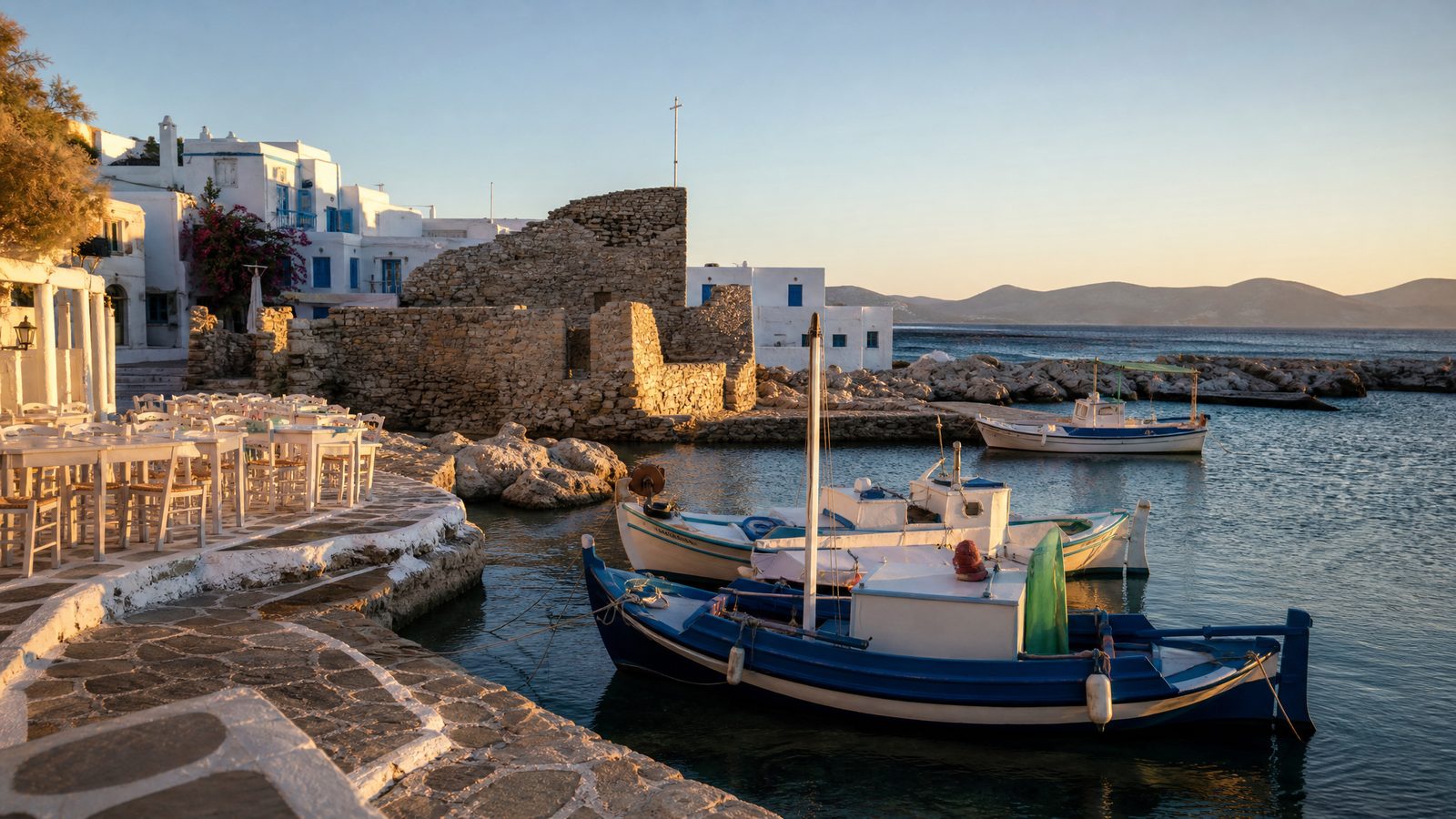
The most photographed spot on Paros, and it earns every frame. A working fishing harbour ringed by tavernas, with wooden boats bobbing metres from your table. Come at golden hour, walk the half-submerged Venetian kastro at the harbour mouth, then let the whitewashed lanes pull you deeper in. Our suites with private pools in Naoussa are minutes away on foot.
2. Swim at Kolymbithres
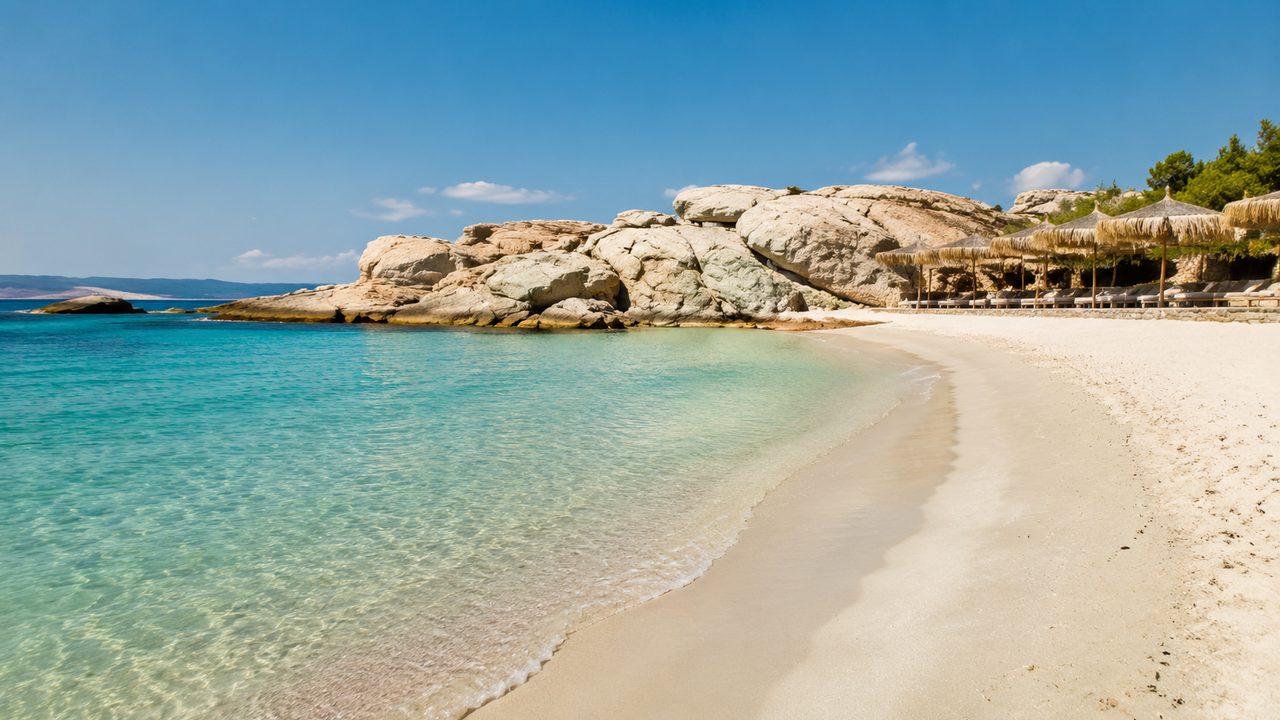
Granite boulders sculpted by wind and sea into smooth, interconnected coves of clear, shallow water — Paros’s most distinctive beach, directly across the bay from Naoussa. A short water taxi ride from the old port delivers you right onto the rocks. Go early; by midday in August the coves fill up fast.
3. Walk the Byzantine Road from Lefkes
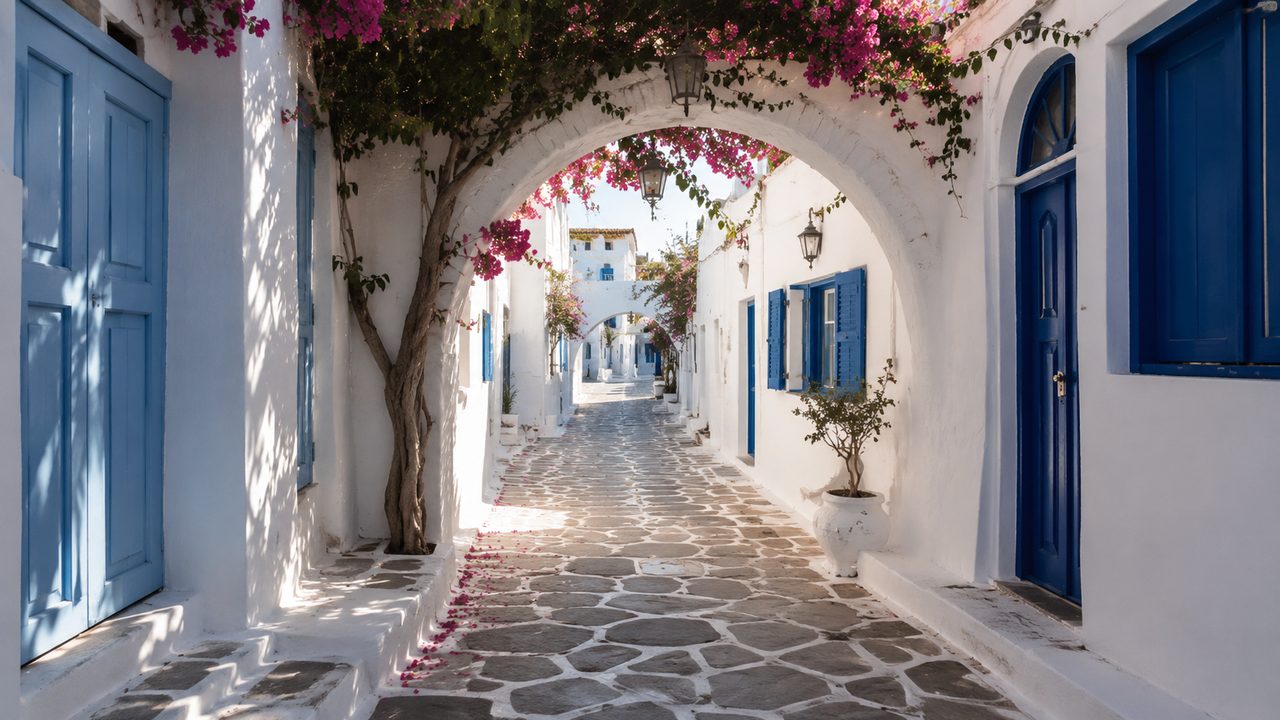
A marble-paved path, a thousand years old, winding from the mountain village of Lefkes down to Prodromos — about an hour, with olive groves and sea views most of the way. Do it in the morning before the heat builds, then reward yourself with a coffee in Lefkes’s shaded plateia, surrounded by an amphitheatre of white houses.
4. Visit Panagia Ekatontapiliani in Parikia
The Church of 100 Doors dates to the 4th century and is one of Greece’s most significant Byzantine monuments. Step inside and let your eyes adjust to the candlelight. Wander Parikia’s old town and the Frankish Castle ruins afterwards — the whole morning costs nothing but ferry fare.
5. Day-trip to Antiparos
The ferry crossing from Pounta takes about 10 minutes. Antiparos moves at a noticeably slower pace: explore the cave, walk the small main town, and find a beach that feels a decade behind the crowds. A lovely half-day or full day away.
6. Beach-hop the east coast
Santa Maria for clear shallows and a lively beach bar scene; Golden Beach (Chryssi Akti), roughly 20 km from Parikia, for windsurfing — the Meltemi wind makes it one of Greece’s best windsurf spots; Faragas or Drios in the south for quieter afternoons.
7. Taste Parian wine
Moraitis Winery was founded in 1910 and is still family-run, making it one of the oldest in the Cyclades. The indigenous Monemvasia and Mandilaria grapes produce wines that are nothing like their Aegean reputation — structured, mineral, worth seeking out. Several tasting rooms are a short walk from Naoussa’s port.
8. Hike in Paros Park
A protected natural area about twenty minutes from Naoussa, with 7 km of marked trails, coastal views, and the Cape Tourkos lighthouse at the island’s north-eastern tip. Best walked in the cooler morning hours; free to enter.
9. Visit the Marathi marble quarries
Parian marble — translucent, fine-grained, quarried here since the third millennium BC — was used in the Venus de Milo and parts of the Parthenon. The ancient quarries at Marathi are quietly extraordinary: tunnels cut by hand into the hillside, largely unchanged. Worth the detour.
10. Catch the sunset at the Venetian kastro
Naoussa’s half-submerged kastro is free, open, and utterly unhurried. Sit on the old stones and watch the light go off the water. No ticket, no queue, no agenda.
11. Eat at a family taverna on the old port
Not the prettiest table, not the most Instagrammable menu — but the grilled octopus and fresh catch are the point. The old port’s family-run places have been feeding fishermen before the tourists arrived; that heritage shows in the cooking.
12. Spend a morning at Naoussa’s fish market
Early mornings at the harbour, before the village wakes up properly, the day’s catch comes in. You don’t need to buy anything. It is simply the island’s real life, unhidden.
13. Take a boat day around the island
Several operators in Naoussa and Parikia run full-day boat trips circling Paros, stopping at sea caves and remote beaches inaccessible by road. One of the better ways to understand the island’s shape.
14. Explore Piso Livadi
A small fishing harbour on the east coast, calmer than Naoussa, with a pretty waterfront and good tavernas. Worth an afternoon if you have a car or catch the right bus.
15. Do nothing by a private pool
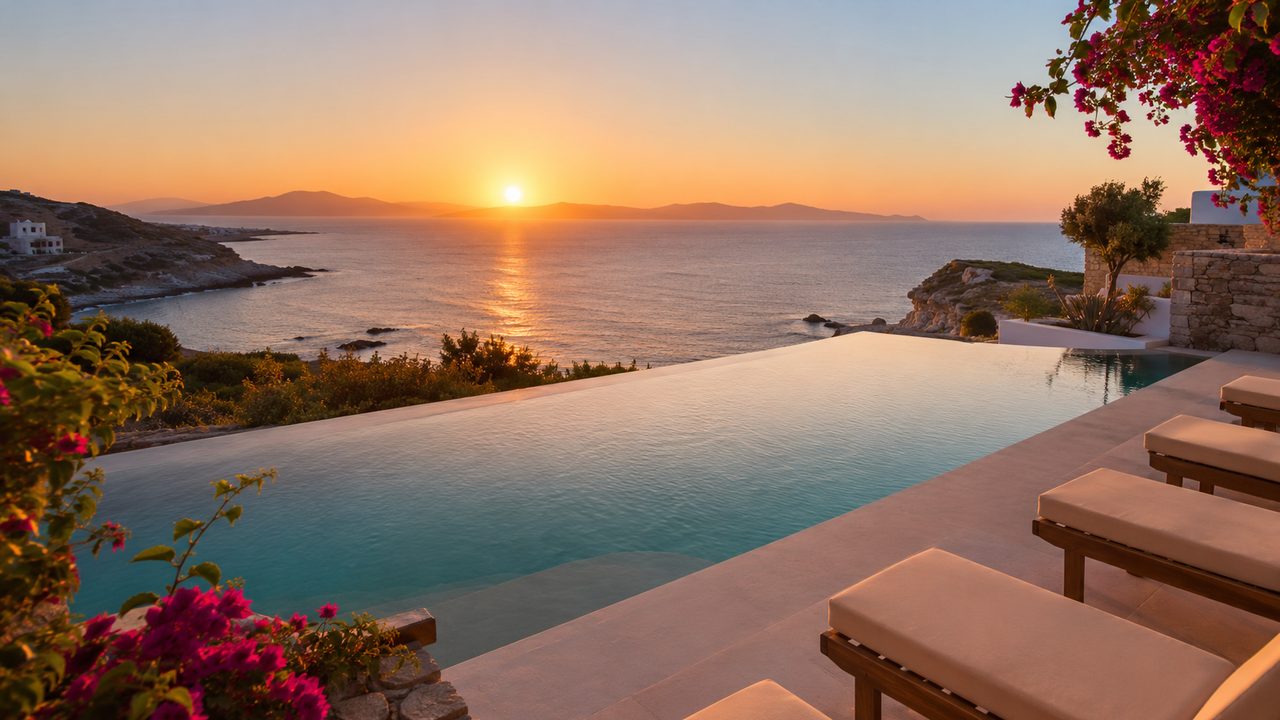
After a day of marble quarries, Byzantine roads, and boat trips, this is genuinely the activity people most wish they’d planned for. We are perhaps biased — but our guests consistently say the afternoon pool hours are the best part of the stay. For ideas on filling the days in between, our 7-day Paros local itinerary maps it all out.
Why is Naoussa the most loved base on Paros?
Naoussa sits on the north coast with Kolymbithres a water-taxi ride away, the old port walkable, and Paros Park on its doorstep. The food is the island’s best — a dense cluster of good tavernas and wine bars in a very small area. It is livelier than Parikia after dark, but never overwhelming. For the practical logistics of choosing where to base yourself, Paros: all you need to know before you go covers it well.
When is the best time to visit Paros?
June — especially the first two weeks — is our honest answer: warm sea, reliable sunshine, fewer crowds, and the Meltemi wind not yet at full strength. September runs it close for atmosphere: lower prices, a golden quality to the light, and the island breathing out after August. Late May through early October works for swimming. Off-season from November to April, many businesses close and the weather is unpredictable.
What is the Meltemi wind and how does it affect your visit?
The Meltemi is a strong northerly wind that arrives in July and peaks through August. It keeps temperatures from becoming unbearable, which is welcome. The downsides: ferry crossings can be disrupted, exposed beaches become uncomfortable, and any sailing plans need flexibility. Naoussa’s harbour is sheltered enough that the village itself stays pleasant. If you are sensitive to wind or planning island-hopping, early June or September will serve you better.
How do you get around Paros?
Buses run between Parikia and Naoussa roughly every hour during the day and cost around €3; the KTEL day pass costs €10 for unlimited travel. Buses run after 7am and stop before 9pm, so they suit daytime exploring but not late evenings. A hire car at around €20–25 per day unlocks the southern villages and east-coast beaches. Water taxis from Naoussa’s old port are the best option for Kolymbithres and the bay’s smaller coves. For nature-focused days, top tips for nature lovers visiting Paros has good trail and transport advice.
How do you reach Paros?
By sea from Athens (Piraeus): conventional ferries take three to four hours; high-speed catamarans do it in around two and a half to three hours. By air: connecting flights from Athens take around forty minutes. Naxos is a twenty-five-minute ferry hop if you are island-combining. Once you arrive in Parikia, Naoussa is a short bus ride or taxi away.
Where should you stay in Paros?
Naoussa is the island’s most rewarding base for most visitors — the food, the harbour, the beaches, and the hiking are all within easy reach. If you want to stay somewhere with a private pool and genuine quiet after busy days exploring, we would love to have you at Paros Comfy Suites in Naoussa. If you book direct through our site, you can book direct within 7 days for 23% off all suites — the only place that rate exists.
Frequently asked questions
How many days do you need in Paros?
Three days covers Naoussa, Parikia, and Lefkes comfortably. Five days lets you add a boat trip around the island and a day on Antiparos. If time is tight, two nights based in Naoussa still lets you tick off the highlights.
Is Paros better than Mykonos?
Paros offers the same Cycladic beauty and better food value, with a more authentic island feel and far fewer crowds. Mykonos wins on nightlife scale; Paros wins on atmosphere, affordability, and the sense that real life is still happening around you.
What is the Meltemi wind and when does it happen?
The Meltemi is a strong northerly wind that affects Paros in July and August. It keeps temperatures bearable but disrupts ferry schedules and makes exposed beaches less comfortable. Early June and September are calmer, windier-free alternatives for most visitors.
Do you need a car in Paros?
For a day or two based in Naoussa, not really — water taxis reach Kolymbithres and buses connect the main villages. A car, typically €20–25 per day in peak season, is worthwhile if you want to explore remote beaches or southern villages at your own pace.
What is the best time to visit Paros?
June — especially the first two weeks — offers warm seas and reliable sunshine without the August heat or Meltemi winds. September is the quieter, often cheaper alternative, with a golden atmosphere, though the Meltemi can linger into early September.